Storm Damage Tree Removal in Tarpon Springs, FL
A Gulf-coast thunderstorm doesn't need a hurricane name to wreck a tree. One violent cell off the Anclote River can snap a forty-foot limb, split a live oak trunk down the middle, or leave a laurel oak leaning at an angle it didn't have that morning. And the damage isn't always obvious — a cracked trunk or a partially torn limb can hang for days before gravity finishes the job, usually onto whatever is underneath.
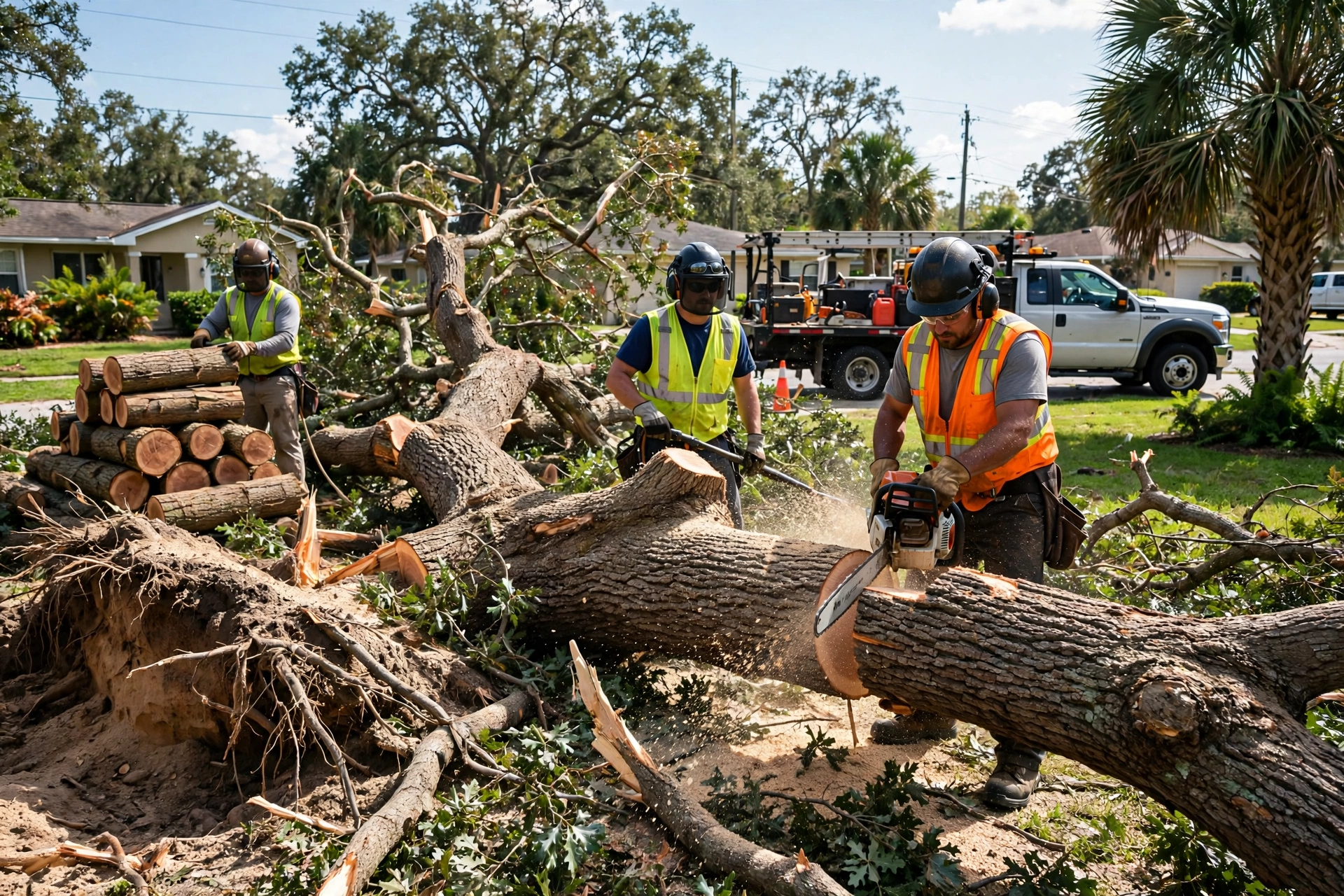
Our storm-damage crews secure the scene first and remove second. We take down hangers and widow-makers, section split trunks under control, and clear trees that are leaning onto roofs, fences, pool screens, and power drops. Every cut is planned so nothing else gets damaged on the way down — which is exactly what goes wrong when a storm-damaged tree is rushed.
If the last storm left you a tree that looks wrong — leaning, split, half-bare on one side — don't wait for the next cell to finish it. Call and describe what you're seeing; we'll tell you straight whether it can wait or needs a crew now.
Signs of storm damage that needs a crew
- Broken limbs hanging in the canopy (widow-makers) that could drop without warning
- A trunk that's cracked, split, or peeling bark after high wind
- A tree leaning at a new angle it didn't have before the storm
- The root plate lifting — soil mounding or cracking on one side of the base
- Limbs resting on your roof, fence, pool screen, or power line
- Lightning scars: a long vertical strip of missing bark after a strike
How we handle storm-damaged trees
1 Assess the danger zone
We walk the tree and the ground around it before any saw starts — checking for hangers, tension-loaded limbs, split unions, and anything the tree is resting on. Storm-damaged trees are unpredictable, so the plan comes before the first cut, every time.
2 Remove the immediate threat
Hanging limbs, split sections, and anything resting on your roof or lines comes down first, rigged and lowered under control. The goal is simple: nothing else gets damaged while we work.
3 Section and lower the tree
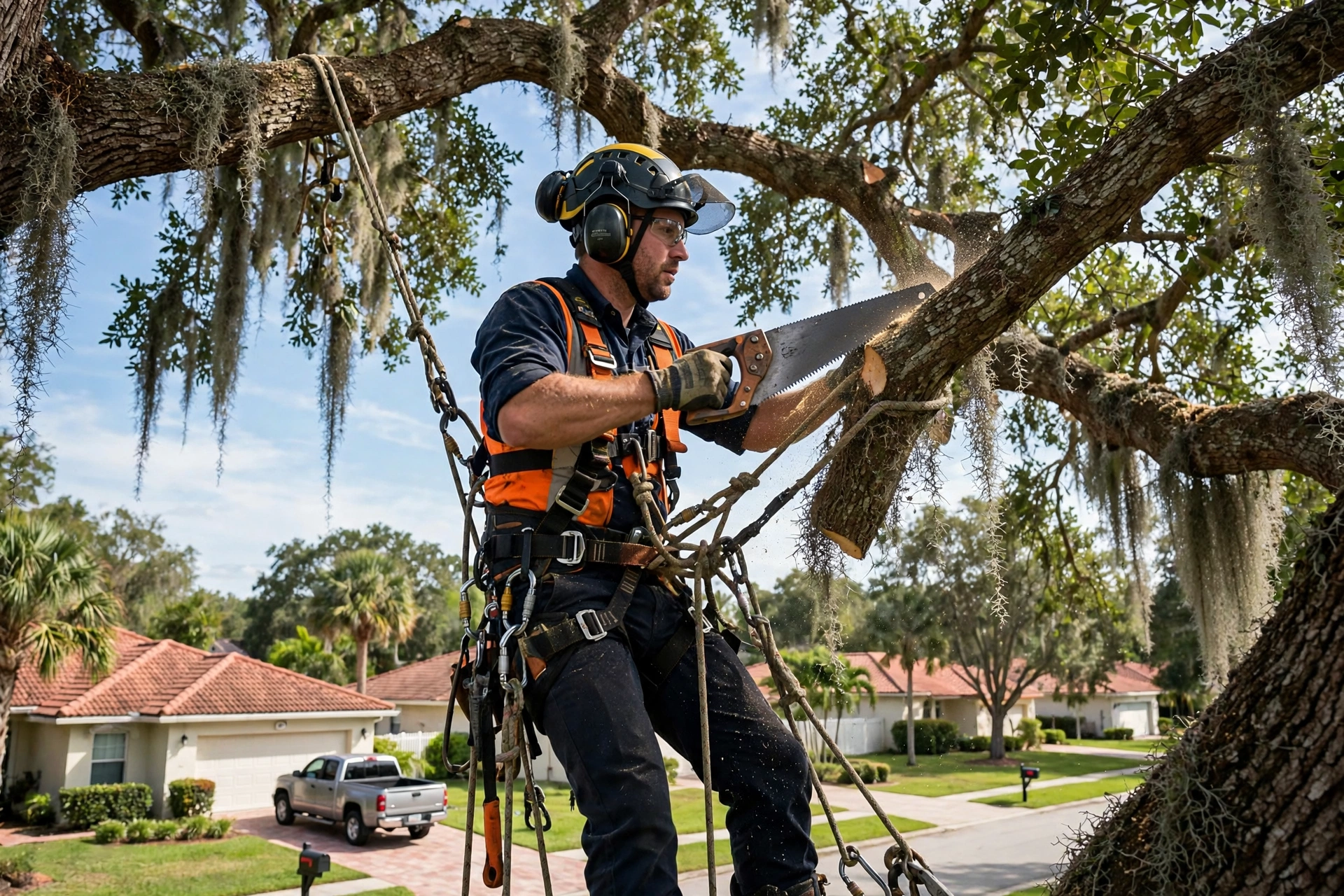
Compromised trees don't fell cleanly, so we take them down in sections — roped, rigged, and lowered piece by piece. It's slower than dropping a healthy tree, and it's the only safe way with storm damage.
4 Clear the site
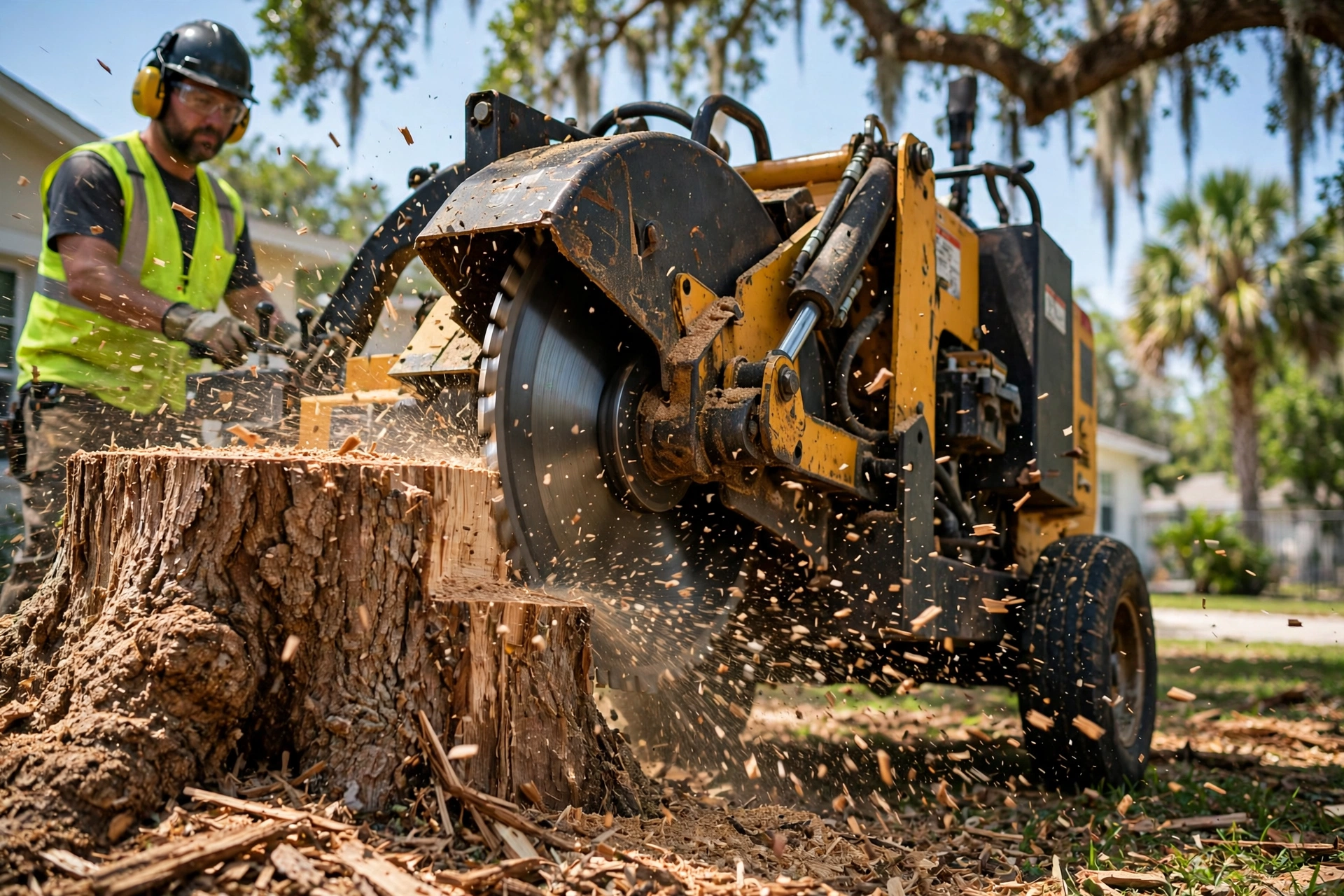
We haul the debris, rake the work area, and leave your yard walkable. If the stump needs to go too, we'll talk through grinding while we're there.
Storm damage on the north Pinellas coast
Tarpon Springs takes tree damage from three directions: named tropical systems June through November, the near-daily summer thunderstorms that boil up over the Gulf, and the occasional winter cold front with straight-line wind. Laurel oaks — planted all over Pinellas decades ago and now aging out — are the most common failure we see, snapping in wind that healthy live oaks shrug off. Around the historic district and the Sponge Docks, mature canopies overhang tile roofs and narrow streets, so one failed limb becomes a roof repair. After any big blow, the phone pattern is the same: hangers today, leaning trees tomorrow, and root plates that gave up a week later. We work that whole cycle.
Need storm damage removal in Tarpon Springs?
One call connects you with a local technician. No forms, no waiting.